
Table of Contents
ToggleIntroduction
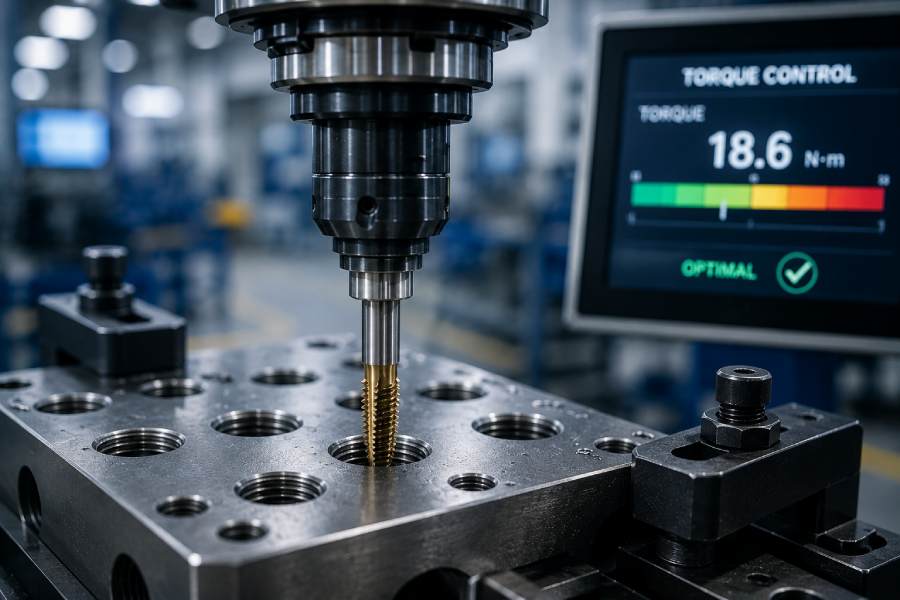
A threaded hole may look simple, but producing it consistently requires much more than rotating a tap into a workpiece. A Servo Tapping Machine can deliver controlled tapping performance, but the real difference comes from how accurately the machine manages torque, speed, alignment, and cutting conditions. In this article, we will explore why torque matters, what happens when it is poorly controlled, and how better torque management can improve thread consistency, tool life, productivity, and overall machining quality.
That is why tapping torque control has become an important part of modern machining. It helps operators maintain a predictable cutting process rather than relying entirely on manual feel or trial and error.
What Is Torque Control in Tapping?
Torque is the rotational force applied while the tap cuts threads inside a drilled hole. During tapping, the machine must provide enough force to cut the material while avoiding excessive load on the tool.
The ideal torque level depends on several factors, including
- Workpiece material
- Tap diameter
- Thread pitch
- Hole diameter
- Tap geometry
- Cutting speed
- Lubrication
- Blind or through-hole configuration
- Material hardness
- Chip evacuation
Effective torque control in tapping therefore means maintaining an appropriate and repeatable level of rotational force throughout the operation.
Why Torque Matters for Thread Quality
Thread quality depends on the tap following the intended cutting path under stable operating conditions. Torque directly influences how the cutting edges interact with the workpiece.
1. It supports consistent cutting
When torque remains controlled, the tap experiences a more predictable cutting load. This helps create threads with more consistent geometry from one component to the next.
2. It reduces tool breakage
A tap is a relatively delicate cutting tool, particularly when working with smaller thread sizes. Excessive torque can overload the tool and increase the possibility of breakage. A broken tap does more than interrupt production. Removing a broken tap from a valuable workpiece can take considerable time and may even result in component rejection.
3. It helps maintain thread dimensions
Stable cutting conditions contribute to better control over thread depth, profile, and dimensional consistency. This becomes especially important when components must fit together repeatedly during assembly.
4. It improves process repeatability
Manual tapping can depend heavily on operator experience. A skilled operator may recognize changes in resistance, but production environments benefit from a process that remains consistent regardless of who is operating the equipment.
This is where thread quality control becomes much easier when torque is managed systematically.
How Torque Affects Thread Formation
Understanding the relationship between torque and cutting resistance makes it easier to identify quality problems.
When torque is too low
Insufficient torque can prevent the tap from cutting effectively. Depending on the application, this may result in
- Incomplete threads
- Inconsistent thread depth
- Poor surface finish
- Cutting instability
- Difficulty maintaining production consistency
The tap may rotate, but rotation alone does not guarantee a properly formed thread.
When torque is too high
Excessive torque creates a different set of problems. The cutting edges face greater resistance, which can increase heat generation and tool stress.
Possible consequences include
- Tap breakage
- Accelerated tool wear
- Damaged threads
- Workpiece deformation
- Increased machine load
- Higher rejection rates
The goal is not maximum torque. The goal is appropriate torque for the specific tapping operation.
During blind-hole tapping
Torque management becomes particularly important when tapping blind holes. Chips have less opportunity to escape, and the tap eventually reaches the bottom of the hole. If the cutting load increases sharply and the machine cannot respond appropriately, the risk of tool damage rises.
Common Problems Caused by Poor Torque Control
Poor torque management often appears as a quality problem before it becomes an obvious machine problem.
Here are some common warning signs
-
Thread size variation
If cutting conditions change from one hole to another, thread dimensions may vary. This can make assembly difficult, especially when components require tight tolerances.
-
Tap breakage
Unexpected increases in cutting resistance can overload the tap. Smaller taps are particularly vulnerable because their cross-section provides less mechanical strength.
-
Poor surface finish
Unstable cutting forces may affect how smoothly the tap engages with the material. The resulting thread surface can become rough or inconsistent.
-
Increased tool consumption
When a tap operates under excessive loads, its cutting edges can wear faster. Replacing tools more frequently increases operating costs.
-
Production interruptions
A broken tool or rejected component interrupts the workflow. In high-volume production, repeated interruptions can have a noticeable effect on output.
-
Inconsistent assembly
The ultimate test of a tapped hole is often the component that fits into it. Threads that look acceptable during inspection may still cause problems if their dimensions vary outside the required tolerance.
Benefits of Controlled Tapping Torque
Proper torque management provides advantages beyond thread accuracy.
-
Better thread consistency
Stable cutting forces support consistent thread formation across batches. This is particularly valuable when the same component is produced repeatedly.
-
Longer tool life
Keeping cutting loads within a suitable range can reduce unnecessary stress on taps. Better tool life means fewer tool changes and less production downtime.
-
Lower rejection rates
When tapping conditions remain stable, fewer components are likely to fail because of damaged or improperly formed threads.
-
Improved productivity
A predictable tapping process allows operators to work with greater confidence. Fewer interruptions also help maintain production flow.
-
Better process control
Torque data can provide useful information about what is happening during machining. A sudden increase in resistance may indicate issues such as incorrect hole size, material variation, tool wear, poor lubrication, or chip accumulation.
-
Reduced operating costs
Tool replacement, rejected components, rework, and machine downtime all contribute to the cost of tapping. Better torque management can help reduce several of these expenses at the same time.
How Modern Tapping Machines Improve Torque Management
Modern tapping equipment is designed to provide greater control over the tapping cycle. Depending on the machine configuration, operators may have control over parameters such as speed, feed, depth, and torque response. A controlled system can respond more predictably when resistance changes during cutting.
For example, consider a workshop producing threaded holes in steel components. If one batch contains slightly harder material, the cutting resistance may increase. A system with better control can manage the operation more effectively than a basic setup that simply continues applying the same mechanical input.
This approach is useful for industries where repeatability matters, including
- Automotive components
- General engineering
- Fabrication
- Machinery manufacturing
- Electrical equipment
- Industrial equipment
- Precision component production
- Job-work machining
Torque Control and Different Materials
Not every material behaves the same way during tapping.
1. Aluminium
Aluminium is generally easier to machine than many steels, but chip formation and material adhesion can still affect tapping performance. Appropriate lubrication and tool selection remain important.
2. Mild steel
Mild steel is widely used in fabrication and engineering applications. Consistent cutting conditions can help maintain thread accuracy while reducing unnecessary tool stress.
3. Stainless steel
Stainless steel can present greater challenges because of its work-hardening characteristics. If cutting conditions are poorly controlled, tool wear and heat generation can become significant concerns.
4. Cast iron
Cast iron produces different chip characteristics and may require a different tapping approach. Dust and chip management also need attention.
5. Harder engineering materials
As material hardness increases, cutting resistance can rise. Selecting the right tap geometry, speed, lubrication, and torque range becomes increasingly important.
This is why there is no universal torque setting that works perfectly for every tapping application.
Practical Ways to Improve Thread Quality
Torque control is important, but it works best as part of a complete tapping process.
1. Use the correct pilot hole
The drilled hole must be appropriate for the selected thread. A hole that is too small can dramatically increase cutting resistance.
2. Select the right tap
Tap geometry should match the material, hole type, thread specification, and production requirements.
3. Maintain proper alignment
Misalignment can increase cutting forces and create uneven thread formation. Rigid and accurate positioning helps keep the tap on the intended axis.
4. Use suitable lubrication
Lubrication can reduce friction and heat while supporting smoother chip movement. The correct lubricant depends on the material and tapping application.
5. Monitor tool condition
A worn tap can require more force to cut the same material. Monitoring tool condition helps prevent quality problems before they become widespread.
6. Maintain consistent machine settings
Frequent and unnecessary changes in speed, feed, or depth can make process control more difficult. Establish suitable parameters and maintain them consistently.
7. Inspect threads regularly
Inspection methods may include thread gauges, visual checks, dimensional measurement, and functional assembly checks. The right inspection method depends on the required tolerance and application.
8. Watch for sudden torque changes
A sudden increase in resistance should not be ignored. It may indicate a worn tool, incorrect hole preparation, chip accumulation, material variation, or another process issue.
Pros and Cons of Advanced Torque Control
Like any production technology, advanced torque management comes with both advantages and considerations.
Pros
- Supports consistent thread quality
- Helps reduce tap breakage
- Can extend tool life
- Improves process repeatability
- Reduces rework and rejection
- Supports higher production efficiency
- Helps identify unusual cutting resistance
- Makes demanding tapping applications easier to manage
Cons
- Advanced equipment can involve higher initial investment
- Operators may require basic training
- Correct parameter selection remains important
- Torque control cannot compensate for an incorrect pilot-hole size
- Tool selection and lubrication are still essential
The key point is that torque control should not be viewed as a standalone solution. It works best when combined with proper tooling, machine setup, material knowledge, and regular inspection.
Conclusion
Consistent threads do not happen by accident. They are the result of controlled cutting conditions, suitable tooling, accurate hole preparation, proper lubrication, correct alignment, and careful process monitoring.
On the other hand, appropriate torque management creates a more predictable tapping process. It supports thread quality control, improves consistent thread formation, and helps manufacturers achieve reliable results over repeated production cycles.
Excessive tapping machine torque can place unnecessary stress on cutting edges and increase the risk of tool wear or breakage. Keeping torque appropriate for the material and tap size can help improve tool longevity.
Torque control in tapping helps maintain more stable cutting conditions. When the cutting force remains within a suitable range, the tap can form threads more consistently across repeated production cycles.
Bring greater control and consistency to every threaded hole.